

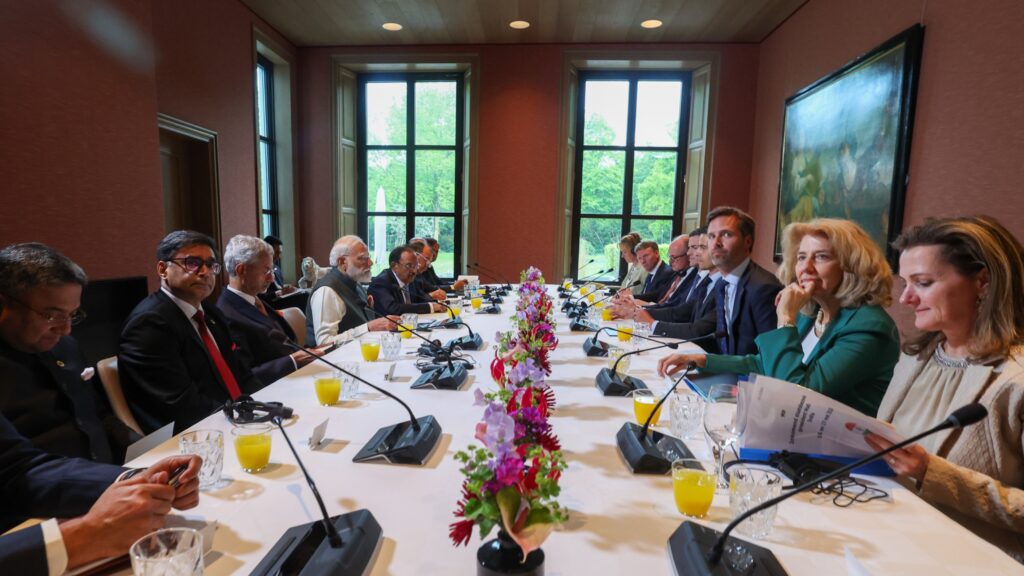
Prime Minister Narendra Modi and Prime Minister Rob Jetten elevated India-The Netherlands relations to a “Strategic Partnership” during official talks in The Hague, launching a comprehensive roadmap for cooperation across trade, technology, defence, semiconductors, renewable energy, water management and education.
Prime Minister Narendra Modi held official talks with Prime Minister Rob Jetten at the Dutch Prime Minister’s official residence, Catshuis, in The Hague on May 16, 2026.
During the talks, the two leaders agreed to elevate the India-The Netherlands relationship to a “Strategic Partnership,” reflecting growing cooperation, shared democratic values and increasing strategic convergence between the two nations. Both countries also adopted the India-The Netherlands Strategic Partnership Roadmap for 2026–2030 to deepen bilateral collaboration across multiple sectors.
Prime Minister Modi and Prime Minister Jetten held wide-ranging discussions covering trade and investment, defence and security, semiconductors, artificial intelligence, renewable energy, maritime cooperation, education, healthcare, agriculture and critical minerals.
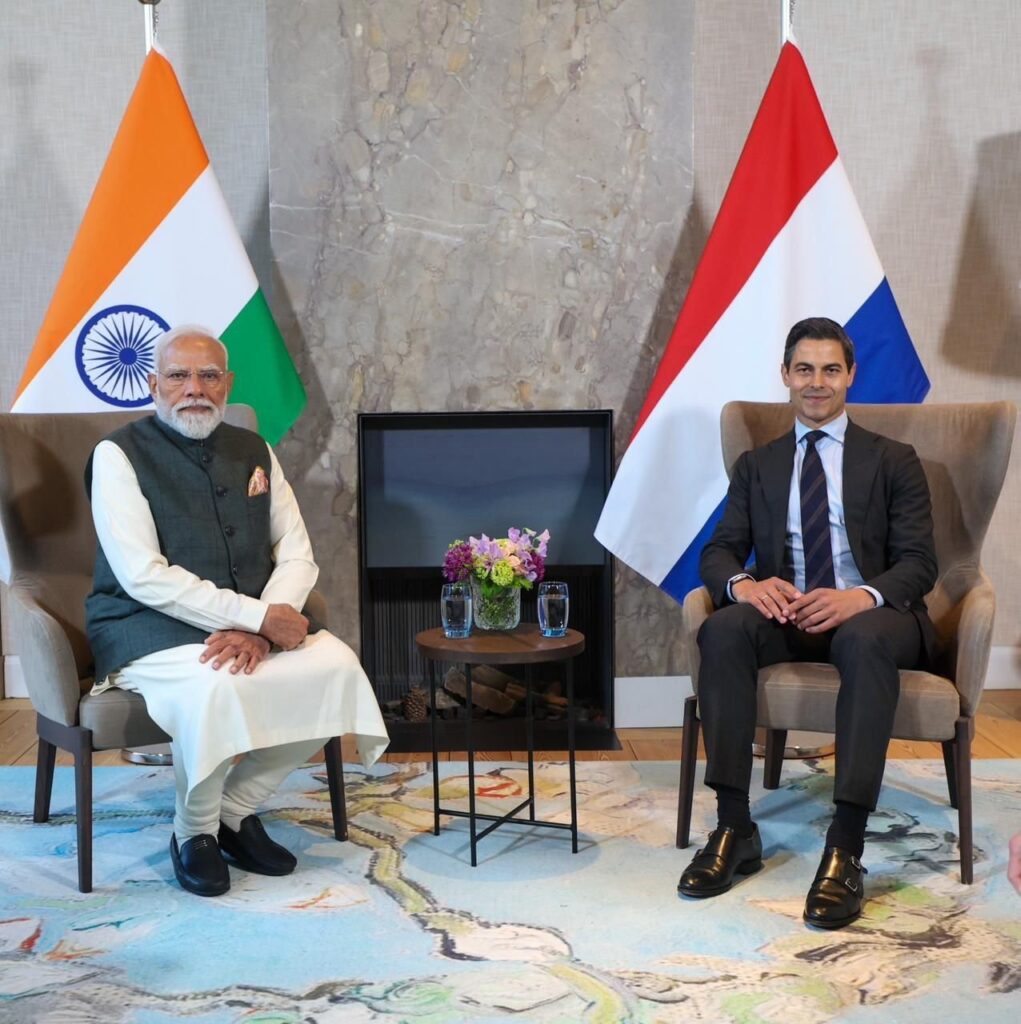
The two leaders highlighted the importance of the India-European Union Free Trade Agreement and called for its early implementation. They noted that the agreement would strengthen resilient supply chains and reinforce India and Europe as trusted economic partners.
One of the major highlights of the visit was the signing of an agreement between Tata Electronics and ASML to support India’s first front-end semiconductor fabrication facility in Dholera. Prime Minister Modi described the partnership as a major step in strengthening India’s semiconductor ecosystem.
The two countries also launched an ambitious India-The Netherlands Roadmap on Green Hydrogen Cooperation and agreed to strengthen collaboration in renewable energy, green shipping, maritime logistics and sustainable transport systems.
In the water sector, both leaders agreed to intensify the Strategic Partnership on Water through cooperation on large-scale water projects, including technical collaboration on the Kalpasar Project in Gujarat. Discussions also covered river management, climate-resilient urban water systems, wastewater reuse and water quality management.
Prime Minister Modi thanked the Dutch Government for facilitating the return of the historic 11th-century Chola Copper Plates to India. The leaders also welcomed cooperation between Leiden University Library and the Archaeological Survey of India to advance research and preservation of the artefacts.
The discussions also focused on higher education, healthcare and technology partnerships. Both sides welcomed cooperation between Nalanda University and the University of Groningen, as well as semiconductor research partnerships involving Indian Institutes of Technology and Dutch universities.
The two Prime Ministers reaffirmed their commitment to strengthening cooperation in defence, cybersecurity, maritime security and counter-terrorism. Prime Minister Jetten strongly condemned the terrorist attack in Pahalgam and expressed solidarity with India in combating terrorism.
Several agreements and Memoranda of Understanding were signed during the visit in sectors including semiconductors, mobility and migration, renewable energy, critical minerals, healthcare, customs cooperation, agriculture and education.
Prime Minister Modi also met leading Dutch CEOs during the visit and encouraged companies from The Netherlands to expand investments in India, particularly in semiconductors, clean energy, digital technologies, maritime infrastructure and healthcare.
The visit marked a significant milestone in India-The Netherlands relations and is expected to open a new phase of strategic cooperation between the two countries.
Source: MEA
